Algeria–Italy Joint Call
Overview
Bilateral Algeria–Italy research call platform for ATRST: team applications, partner budgets, PDF submission, expert scoring and results. 99 proposals, six funded; closed after the call ended.
The goal
In 2024 Italy's Ministry of University and Research and Algeria's Ministry of Higher Education and Scientific Research opened a joint call for proposals under their 2024–2028 memorandum: €1.5 million, €150,000 per project, thirty-six months, proposals in English, submissions closing on 15 January 2025. Italian applicants applied through the Italian national portal; Algerian applicants needed a place to build and submit a consortium proposal, and the administration needed a place to evaluate it.
The platform had to do four things, on a deadline set by the call itself:
- Let a consortium assemble — a leader, members, partners on both sides, with roles and curricula, before anyone writes a proposal.
- Capture the dossier the call prescribes — nine narrative parts, work packages, deliverables, objectives, and a budget per partner and per cost line.
- Receive a submission that can be judged — a complete dossier plus the signed PDF, not an e-mail attachment.
- Score it — experts designated per proposal, a common grid, a computed pass/fail, and results that can be printed and exported for the funding decision.
What was built
Accounts and profiles
Accounts are created in bulk by the administration with a shared initial password, an optional e-mail verification and an expert flag — the call's population arrived as a list, not as self-registrations. An institutional e-mail domain already registered maps the account to its organisation and verifies it automatically. An ORCID identifier imports education, employment and keywords. Administrators validate or reject profiles.
Teams and membership
A user creates one team, which becomes both the consortium and the workspace; the team's project is created automatically when the team is saved. Teams can be open to join with published terms, so a researcher without a consortium can be found. Membership works by invitation or by join request carrying the candidate's CV, accepted or rejected by the leader. Each membership can carry the investigator flag, with one principal investigator per country — the completeness checks and the exports key on them.
The dossier
The project page carries the identity of the proposal — name, short name, description, one thematic area, up to two activities, keywords, expected dates and duration, total cost and requested funds — and the nine narrative parts the call prescribes: abstract, objectives, concept, diversity, expected outcome, open knowledge, work-package milestones, consortium bilateral value, references. Partners are listed per country with a coordinator flag, their organisation and their members; each partner carries six budget lines (personnel, consulting, travel, equipment, other goods and services, overheads) with cost and requested amount. Work packages name a lead partner, carry dates and effort, and produce deliverables; objectives break into tasks assigned to members.
Submission
A completeness engine checks the documents, both principal investigators, the partners, their budgets, their members, the work packages, the deliverables, the team members and the uploaded PDF. Until every check passes the status stays Incomplete and a status banner on the dashboard says why. When it passes, the proposal becomes Ready to submit, the applicant uploads the signed dossier (PDF, 30 MB) and marks it saved. A manual path exists for dossiers received outside the platform.
Evaluation
The administrator validates or rejects a dossier with a motivated note, then assigns experts; one report is opened per expert, seeded with the common grid (scored questions with a minimum and a maximum) and the call's four priority factors. Each expert scores every question with a comment and answers the priority factors, then submits. The verdict is computed: a total above 18 with no answer below 3 passes, a low total fails on the total criterion, a single low answer fails on the critical criterion. Two passing reports send the project to financial review and close the remaining reports; two failing reports reject it and close the others — a quorum rule, so one severe or one lenient expert cannot decide alone.
Results and administration
Projects, results (with per-expert scores), teams and users export to spreadsheet; a project recap and an expert report print as PDF. The administration also manages the grid, reference data, organisations and domains, and watches the application through Laravel Pulse.
What the platform did not do
E-mail delivery was not operational: the Assign to Experts action tells the administrator, in the form itself, that no notification will be sent and that experts must be notified by hand. There is no mail class and no notification class in the code. The evaluation campaign therefore ran with manual notification and in-app messaging — an honest limitation of this build, and one of the reasons the next platform (below) treats notifications as a first-class feature.
Architecture
| Layer | Choice |
|---|---|
| Backend | PHP 8.2, Laravel 11 |
| UI | Filament 3, three panels — team (consortium workspace, /), app (account), admin |
| Reactivity | Livewire 3, Volt, Alpine.js |
| Tenancy | Filament team tenancy: tenant = consortium, route prefix /teams, global scope on projects, a seeded Global Team as the neutral workspace |
| Data | MySQL, 47 migrations, 24 Eloquent models |
| Authorisation | Filament Shield + spatie/laravel-permission, 15 policies |
| Output | Snappy/wkhtmltopdf for the recap and expert-report PDFs, four Filament exporters |
| Docs in app | guava/filament-knowledge-base serving docs/en |
Two design decisions carried the build. First, the consortium is the tenant: every partner, budget, work package and document belongs to a team, so a project page is a workspace rather than a form, and access control is membership. Second, the dossier is structured before it is judged: the nine parts, the partner budgets and the work packages are rows, which is what makes the completeness engine, the exports and the expert's reading view possible — and what made the PDF an artefact of the data instead of the data itself.
The outcome
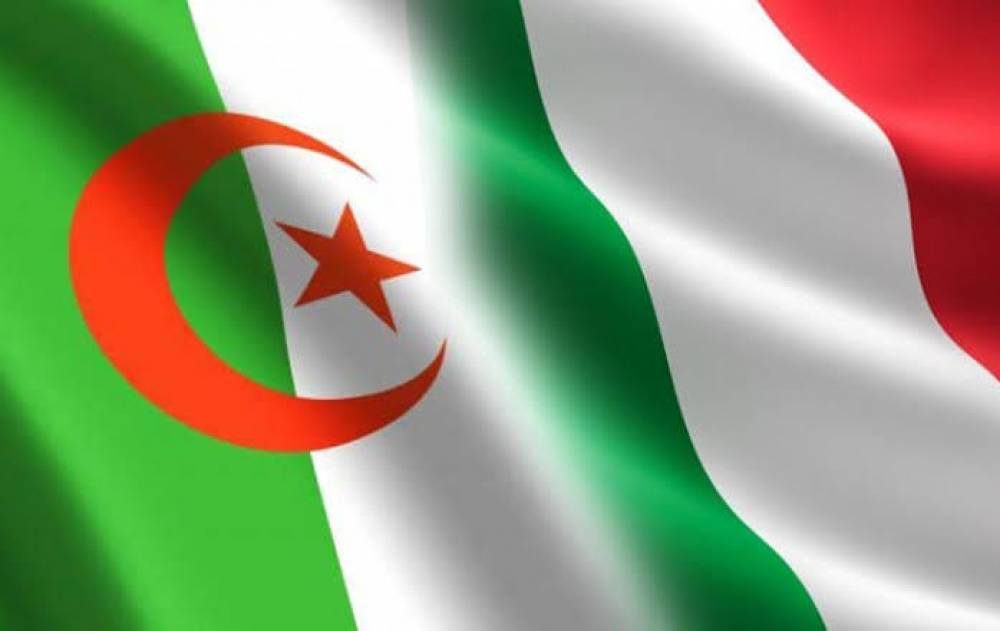
DGRSDT's call announcement sent Algerian applicants to algitacall.atrst.dz/register. The call closed with these results:
- SALDURAL
- HEAT-CARE
- MYCOTOX-SAFE
- EELMED
- METHODE
- CoReMed
Status
Closed. The Algeria–Italy joint call ended — submissions closed in January 2025, evaluation and the funding decision followed in 2025 — and the platform is no longer needed. The site is retired; this specification and the code are kept as the record of the product. The national platform commissioned by the same client generalises what was learned here: several institutions, several calls, configurable evaluation rules, real notifications and a data protection programme.