DHD RH
Overview
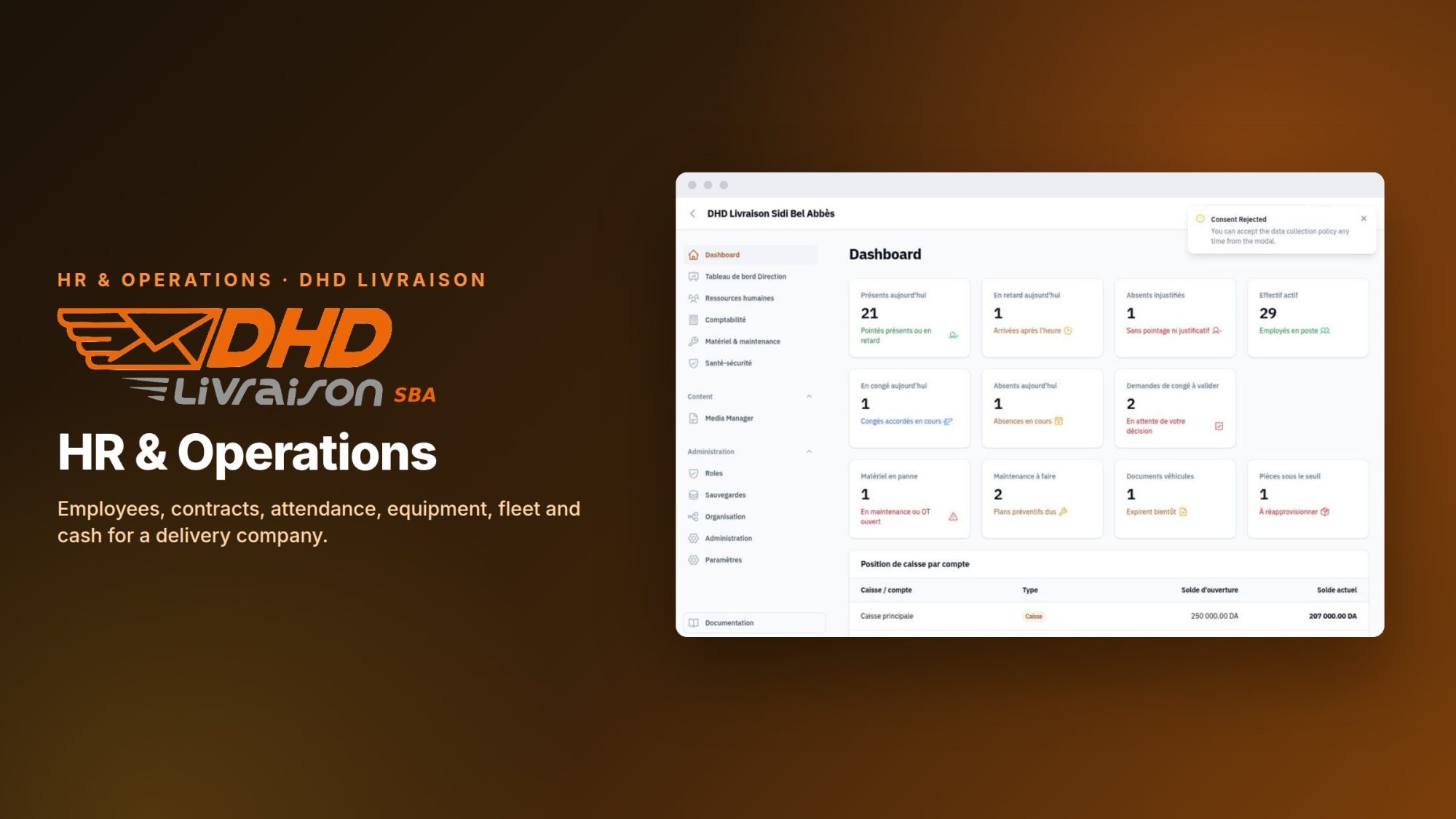
An HR and operations system for a delivery company: people, shift planning, attendance, payroll, fleet, purchasing and cash in one place.
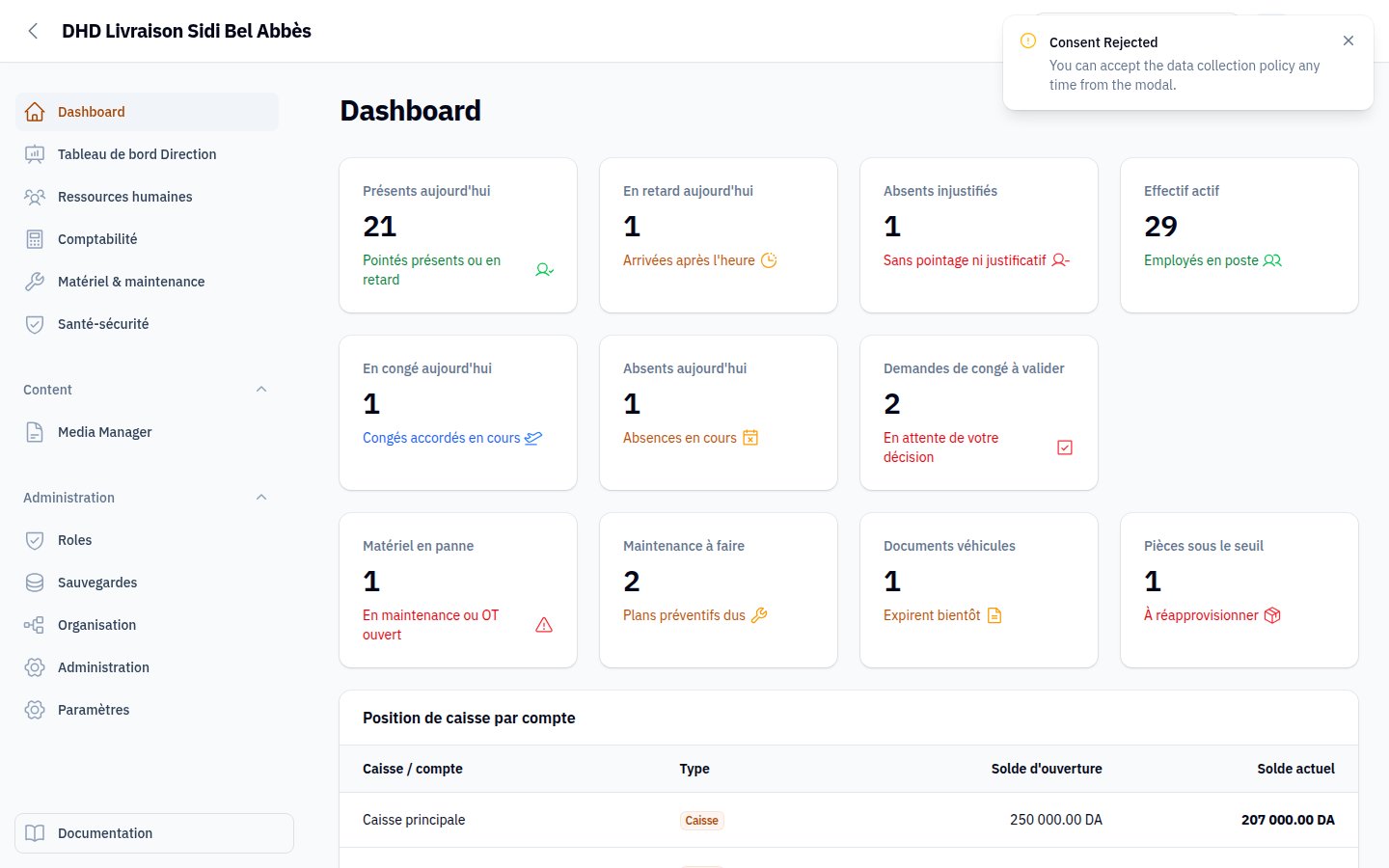
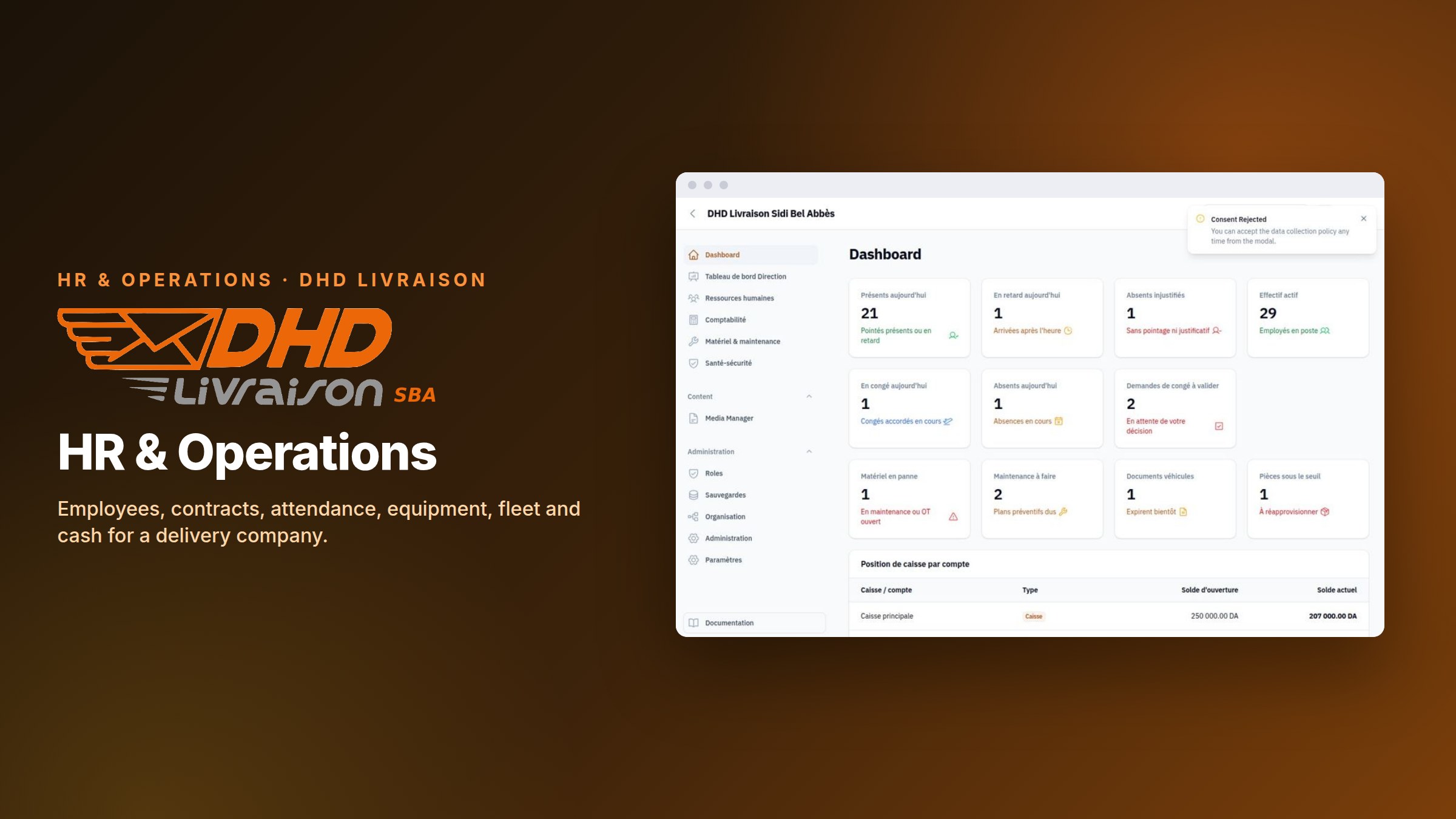
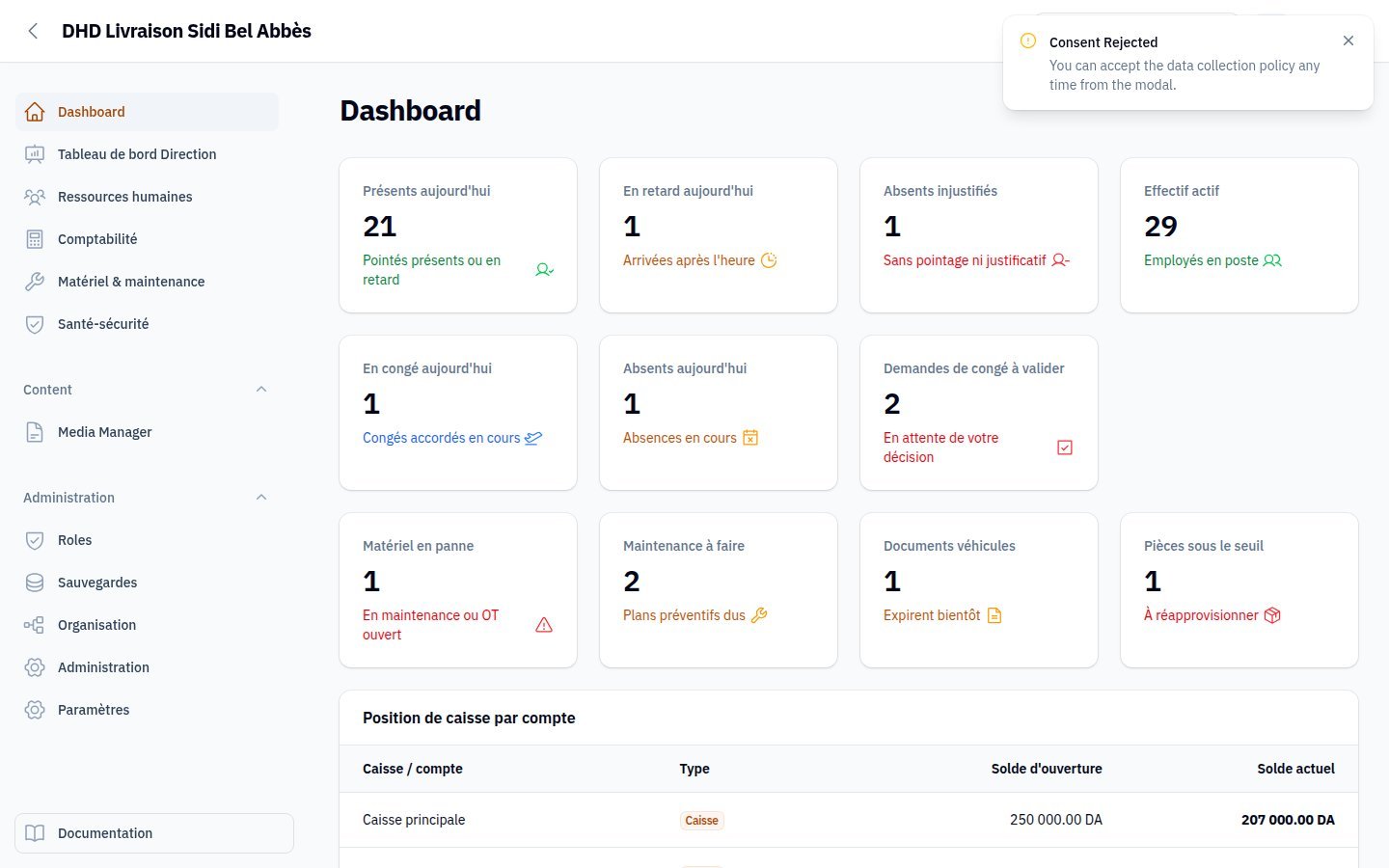
DHD RH is the back-office system of a delivery company: people and contracts, shift planning, attendance, leave, payroll, discipline, safety, equipment, fleet, purchasing and cash. It is built as one product rather than a bespoke app for one company, with a client profile that changes the name, colours, sites and numbering. I designed and built it alone over five weeks and it is the most active project in my work right now.
The problem
A delivery company's back office is a dozen problems that share the same people. A driver has a contract, a shift cycle, a leave balance, a salary advance, a vehicle, a fuel card and a safety file, and each one lives in a different spreadsheet or a different person's inbox. Planning is done a week at a time because the shifts rotate, and the rotation is in someone's head. Attendance comes from a clock device that exports a file nobody trusts. Payroll is prepared by copying figures from three sources, and once it is paid there is no reliable record of what changed and who changed it. When a vehicle breaks down, the work order, the part and the cost are recorded somewhere else again. The result is not one dramatic failure but a hundred small reconciliations, and a month-end that depends on one person being available.
The solution
One employee record that every module reads from, with planning, attendance, leave, payroll, equipment and documents hanging off it instead of duplicating it. Shift cycles are patterns that generate a week's schedule rather than a wall of stored shifts. Payroll months are prepared, adjusted and then locked with the name of whoever locked them, so a paid figure cannot change quietly. Issued documents get a sequence number and a QR code that opens a verification page, and the same client profile that brands the panel also makes the product sellable to another company without a fork.
Goals
One version of the employee: contracts, planning, payroll and equipment should all read the same record, so no module can disagree with another.
A payroll that can be audited: a month should freeze when it is paid, with a named person and a history, and documents should be verifiable after they leave the office.
A product, not a one-off: a new company should be a configuration and a logo, not a second codebase.
What I built
People and contracts
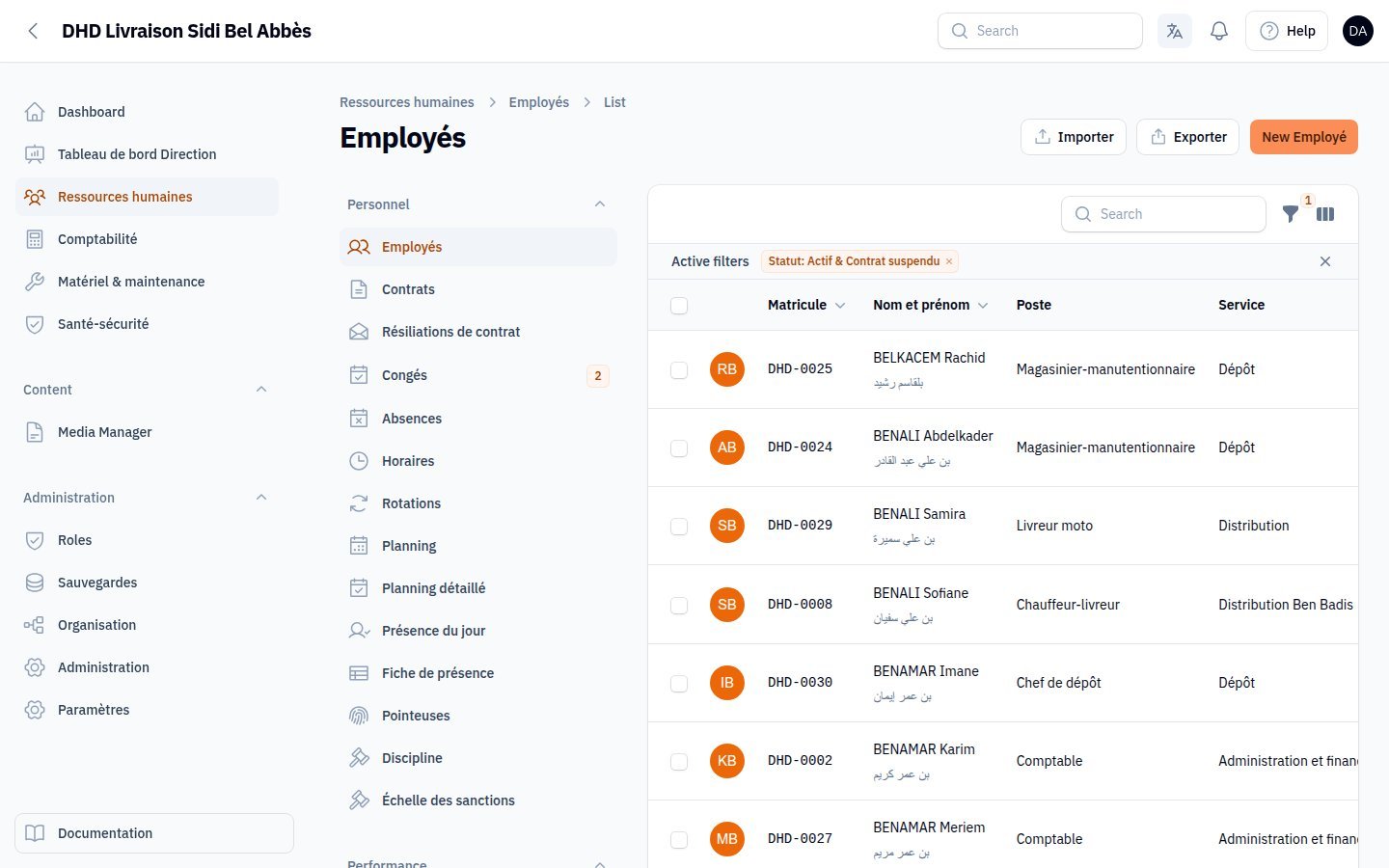
An employee record with a place in the organisation: site, service, post, team, manager, wilaya, commune, photo and a registration number with a per-client prefix.
Contracts and their life: the contract, its amendments and its termination, with dates and salary, so the current terms are a record rather than a document in a drawer.
Career and qualifications: career events, qualifications, the requirements attached to a post, evaluations and evaluation grids, which is what makes a promotion or a training need traceable.
Family and allowances: children, allowances and notes attached to the employee, because payroll depends on them and they change at their own pace.
Planning and attendance
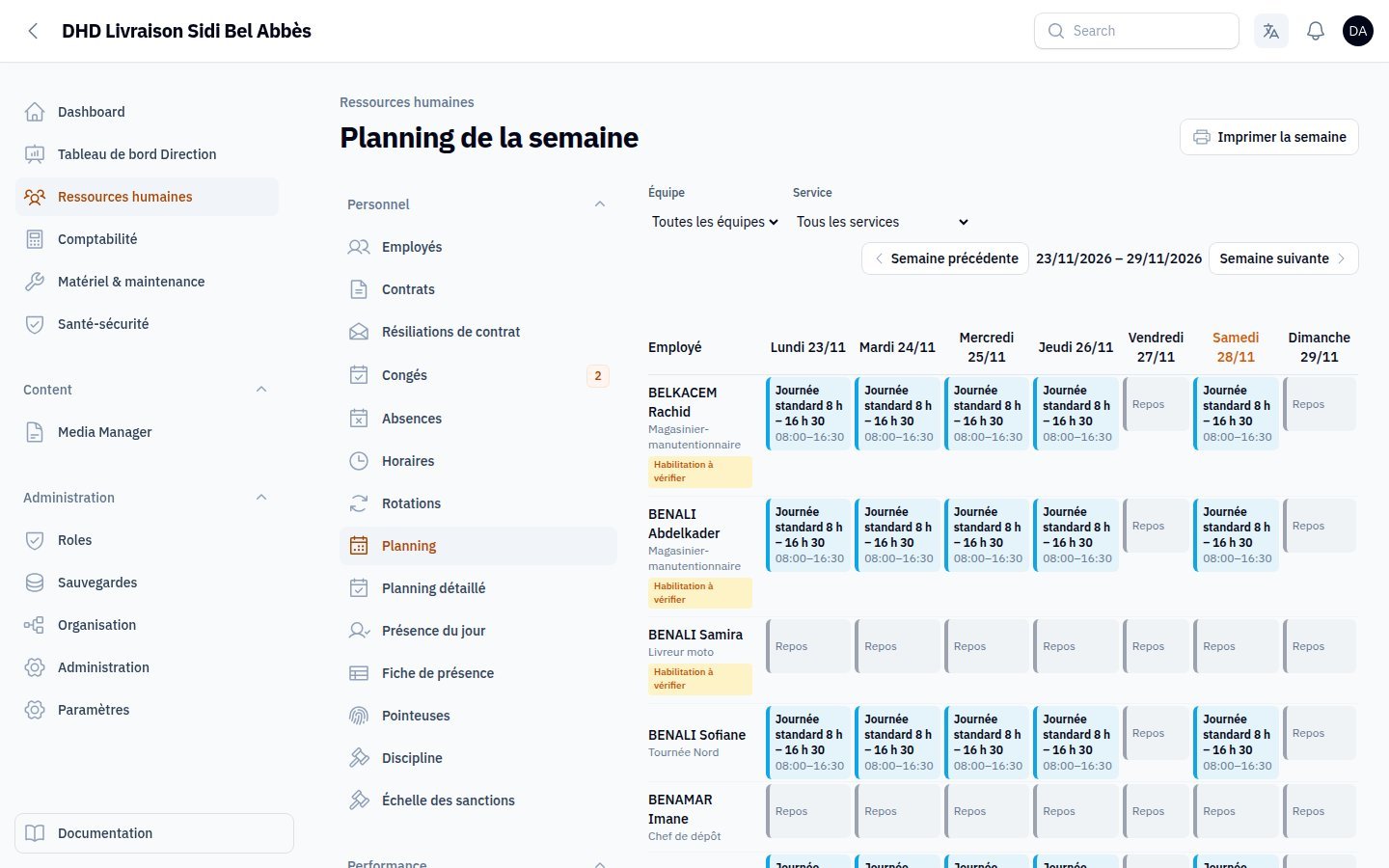
Rotation patterns: a pattern describes a shift cycle and computes the schedule for a given week, so the app does not materialise every future shift just to show next Monday.
Schedules and templates: work schedules, time slots and timetable templates cover the normal week and the exceptions, with public holidays alongside them.
Planning by day: entries are made per employee, team or post, and the grid only loads the window being looked at, which keeps a large staff list usable.
Attendance from the clock: punches arrive from the devices, become attendance days, and sit next to absences and leave so the month can be read in one place.
Payroll and documents
Leave with decisions and accruals: requests, approvals, accruals and adjustments, plus absence types, so a balance is calculated rather than remembered.
A payroll month that locks: adjustments, bonus campaigns and proposals are prepared inside the month, then the month is locked with the person who locked it, and unlocking is a deliberate act.
Advances in instalments: a salary advance carries a repayment schedule, so the deduction is part of the payroll instead of a note that everyone forgets.
Verifiable documents: contracts, certificates and letters get a sequence number and a PDF, and each one has a QR code that opens a page proving it is genuine without exposing the database.
Safety, discipline and equipment
Discipline cases: a case, a sanction type and an approval decision, so a warning has a file and a date rather than a conversation.
Safety inspections and accidents: inspection types, reports, corrective actions and work accidents, with medical visits and signed safety acknowledgements in the same record.
Equipment assignments: equipment categories, assignment to a person and handover back, so a phone, a scanner or a tool has a holder and a date.
Protective equipment: stock, issues and movements, because PPE is consumed constantly and a paper register never matches the cupboard.
Fleet, purchasing and cash
Vehicles and their paperwork: documents, fuel logs, missions and the employees on a mission, so the vehicle's legal and operational state is in one place.
Breakdowns and work orders: a breakdown becomes a work order with parts and a planned service, which turns maintenance from a phone call into a record.
Purchasing and stores: suppliers, purchase orders, parts, stock movements and inventory counts, so what was ordered, what arrived and what was used can be compared.
Cash accounts: accounts, movements and a month closing, with expenses and categories, which is the piece that lets the operation reconcile without a separate ledger.
Architecture
Laravel 13 with Filament 5 for the entire panel, Vue 3 where a screen needs more than a form, and MySQL for data, in French and Arabic. Every module hangs off the same employee record instead of copying it, and the relationships do the work that a spreadsheet would otherwise duplicate. Document numbers come from a central sequence, and an issued document is stored as a PDF with an unguessable identifier behind a public verification page. A client profile supplies the company name, colour, sites and numbering, while legal identifiers, signatories and alert delays are settings, so the same codebase serves another company without a branch. The deployment path takes a backup before release, which matters for payroll data, and the test suite was written alongside the modules. Built in 2026 (60 commits).
Result
Built for the delivery company's back office and packaged so the same product can serve another company. Planning, attendance, payroll, fleet and purchasing now read from one employee record, payroll closes with a locked month, and documents can be checked from a QR code instead of a phone call to the office.
Screens are from a demo copy with sample data. The interface is in French, the language the company works in.
Interactive preview
Scroll inside the browser window — every page is a real screenshot of the app.