Warehouse Beacon
Overview
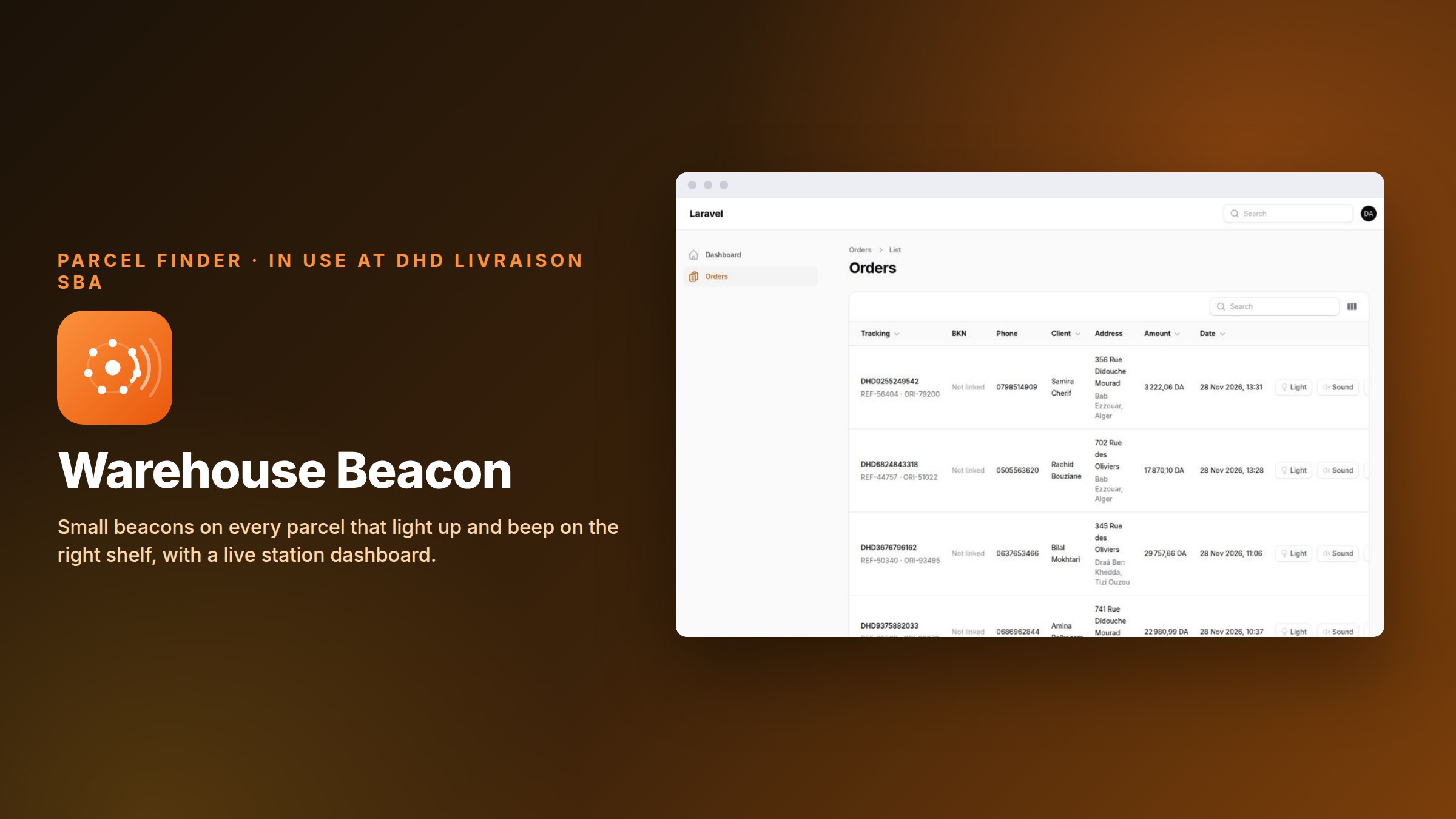
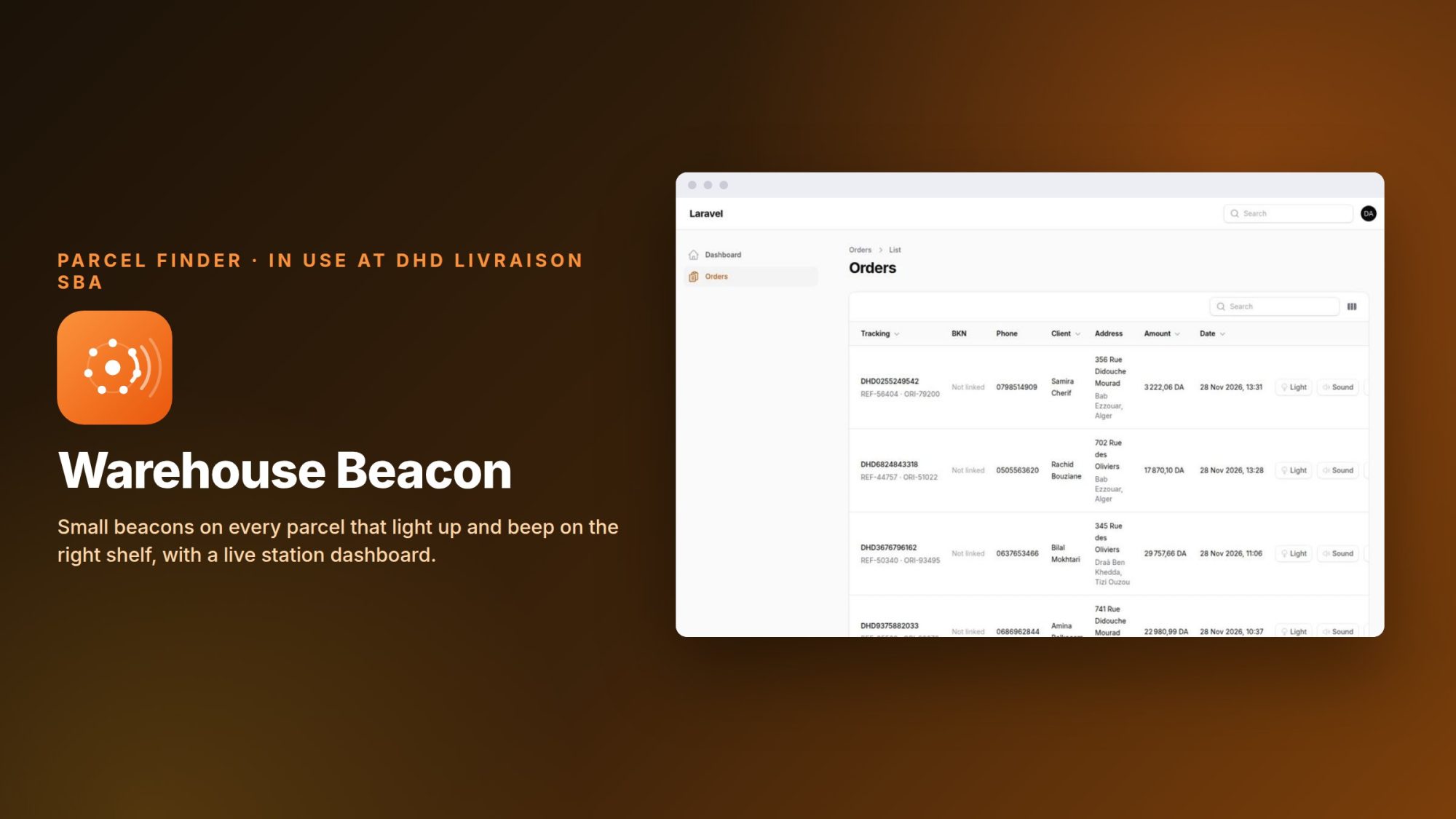
My parcel-finding system: small beacons on each parcel light up and beep on the right shelf, with a live dashboard. In daily use at DHD Livraison SBA.
Warehouse Beacon is my own product: a parcel-finding system for delivery stations. A small battery-powered beacon is clipped to each parcel, and when staff need that parcel the beacon lights up in a chosen colour, shows a number and beeps. Instead of a person walking the racks reading labels, the parcel announces where it is. It is in daily use at DHD Livraison SBA, a delivery company in Sidi Bel Abbès, where it is part of a normal shift rather than a pilot.
The problem
In a delivery station, a parcel is a cardboard box among hundreds that look the same. A barcode tells the company that the parcel arrived; it does not tell anyone where the parcel is now. Staff find it by memory, by asking the person who was on shift yesterday, or by walking the aisles reading labels while a customer waits on the phone. The station has a catalogue of orders, but the catalogue knows the delivery status, not the physical position. When a parcel is moved to make room, the mental map of the person who moved it becomes the only record. A screen with a search box is not enough, because the search still ends with a human looking at shelves. What the station needed was a way to make the parcel itself respond.
The solution
A beacon is clipped to the parcel and linked to its order. When someone looks the parcel up by phone number or reference, the dashboard asks the right beacon to light up in a bright colour, show the order number and beep, so the person at the counter walks to a signal instead of searching the racks. The station keeps a live view of every beacon, returns close the loop with the delivery company, and nothing extra is asked of staff beyond attaching a beacon and scanning it once.
Goals
Find a parcel without walking: a lookup by phone number, reference or beacon should end with a light and a beep in the right place.
Know the fleet is alive: battery and last contact should be visible before a beacon is relied on.
Run for months unattended: a beacon should keep reporting on its own battery, and the history should not grow without limit.
What I built
The beacon
A small battery-powered beacon: it lights up in any chosen colour, shows a number, and beeps when asked, and it runs for months on its battery instead of needing a daily charge.
Two generations in one product: the newer beacon has a locator colour, adjustable brightness and a number display; the older one simply ignores the commands it does not support, so both work in the same application.
Every beacon has its own identity: each one is registered and named before it reaches a station, so it can be matched to a parcel record and traced if it goes missing.
Ready when it arrives: a new beacon is already known to the dashboard, so it can be clipped to a parcel the day it is delivered to the station.
Linking and finding parcels
Link by scan: scanning a parcel and a beacon attaches one to the other, and the link records when it was made and when it was removed.
Resolve any identifier: a phone number, an order reference or a beacon id all lead to the same station order, because the person at the counter rarely has the same number as the label.
Make it light up: a lookup can light the beacon in a colour and brightness, show the order number on it, or ping it to check that it is listening, and the result comes back to the screen.
Unlink cleanly: when a parcel leaves, the beacon is freed for the next one instead of staying attached to a closed order.
The live dashboard
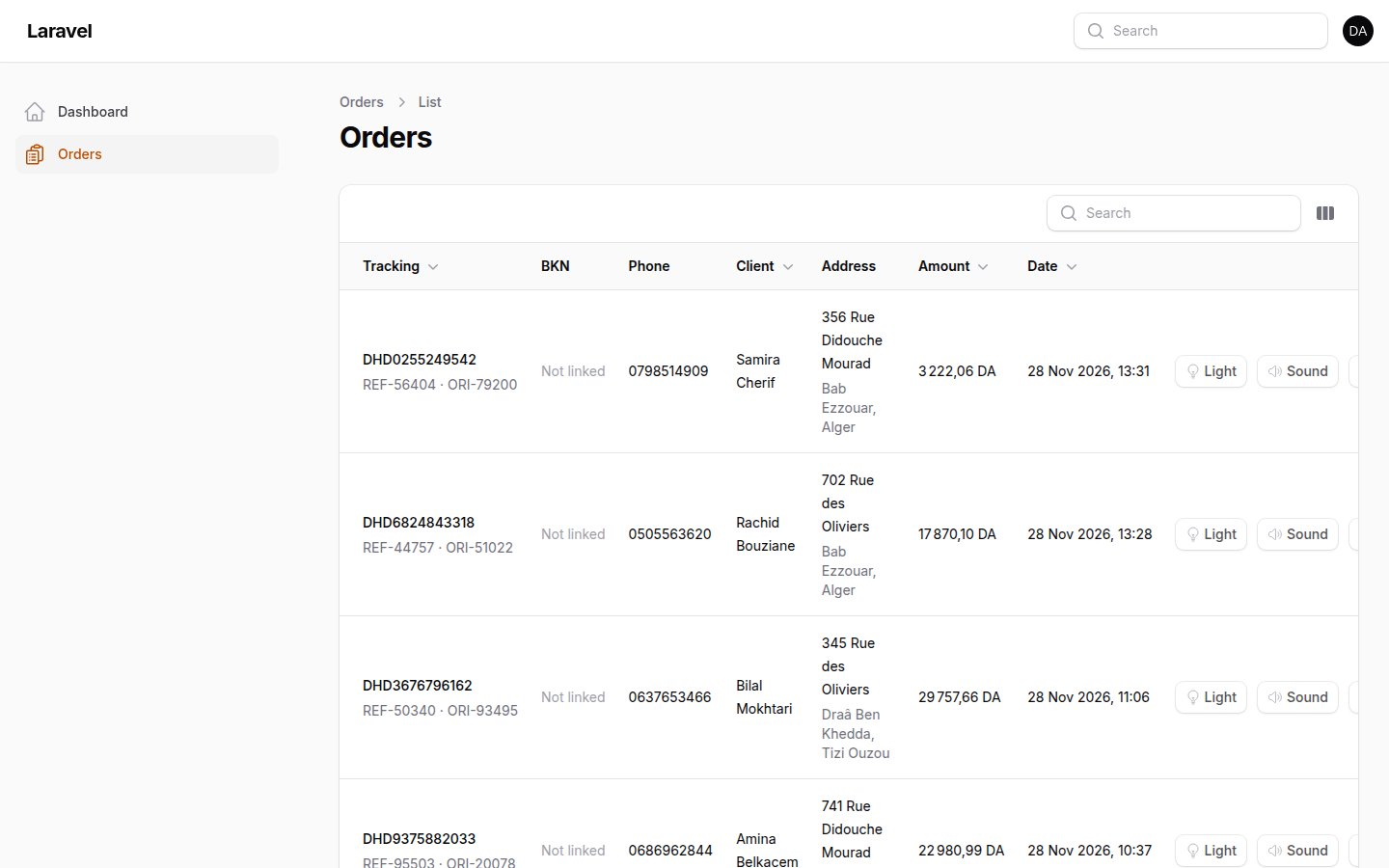
Every beacon in one list: name, battery, state and last seen, with a detail view for the ones that need attention.
Live, not refresh: changes reach the screen the moment they happen, so a beacon reporting or a command completing appears without anyone reloading the page.
Remote commands: colour, brightness, number and ping are one click for the operator and go straight to the beacon in the station.
Battery health: battery reports and a health view show a beacon that is draining faster than the rest before it disappears from the station.
Station orders and returns
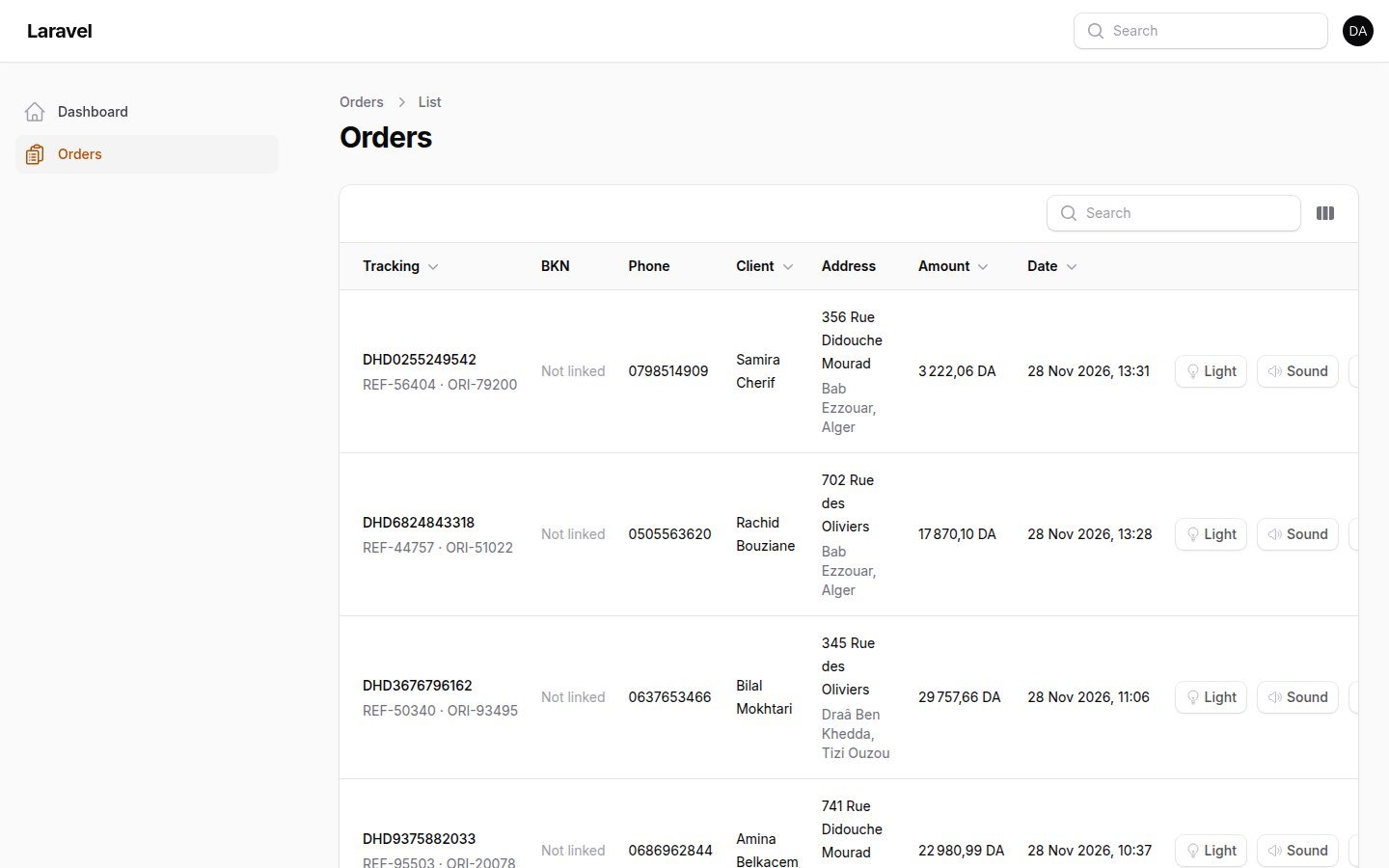
Orders kept locally: the delivery company's station orders are brought into the app and refreshed in the background, so a lookup is instant and the counter keeps working when the company's system is slow.
A lookup-first flow: the company's catalogue is only consulted when a parcel is genuinely missing, which keeps the counter usable at its busiest hour.
Bulk returns: staff paste a list of parcels and light all of them at once, so a whole return run is collected in a single pass instead of one search per box.
Returns as a flow: a return is dispatched back to the delivery company and recorded, instead of ending as a note on a shelf.
An event per action: linking, looking up, dispatching a return and changing a beacon all leave a record with the operator, which is what makes a dispute answerable.
History and reliability
Battery reports on a schedule: each beacon reports its charge on its own, so a failing battery is visible weeks before it fails.
Current state kept separate from history: what is on screen is always the latest reading, while the long history is stored on the side, so a full rack of beacons never slows a lookup.
Daily summaries and a purge: the day's activity is rolled into a summary and old detail is removed, which bounds the history without losing the useful shape.
One request for the whole fleet: the dashboard asks for all beacons at once instead of one request per beacon, which matters when a station holds a full rack.
Commands handled in one place: the part of the server that talks to beacons is kept apart from the rest, so a change there does not spread through the whole application.
Architecture
A web dashboard and a server that talk to the beacons wirelessly in real time, plus a small local gateway in the station that carries messages between the two. Staff work in the browser: the server holds every beacon's state, sends colour, brightness, number and ping commands, and takes in battery and last-seen reports. Commands always go out through the gateway rather than to a beacon directly, which is the reliable path when a station holds a full rack of them. The delivery company's orders are kept locally and looked up first, and both beacon generations live in one interface. Built in 2026.
Result
Two beacon generations in one product and a live panel that stations use every day. Staff link beacons to parcels and find them from a screen in seconds, while the dashboard keeps the fleet's battery and contact state visible. The return flow now ends with the delivery company rather than on a shelf.
Screens are from a demo copy with sample data. In production at DHD Livraison SBA.
Videos
Interactive preview
Scroll inside the browser window — every page is a real screenshot of the app.